
Stop the activity causing the rubbing, dry the skin, then apply a barrier balm or slip on a breathable underlayer before you carry on. Most thigh chafing settles within a few days once friction and moisture are under control. If the skin breaks, weeps, or gets worse rather than better, pause activity and treat it properly rather than pushing through.
TL;DR:
- Thigh chafing often occurs from skin or fabric friction combined with sweat and heat, affecting people of all body types and activity levels.
- Wearing moisture-wicking fabrics, flat-seam garments, and breathable underlayers can significantly reduce skin-to-skin contact and moisture buildup.
- Barrier balms, petroleum jelly, and zinc oxide cream are effective quick fixes, especially in humid conditions or during prolonged sweating.
- Proper skin care involves cleaning gently, protecting the area, and avoiding irritants, with most mild cases healing within a few days.
- Effective prevention includes adjusting garment fit, practicing good hygiene, using appropriate accessories, and choosing clothing that minimizes friction points.
Table of Contents
- What actually causes thigh chafing?
- Practical prevention: fabrics, fits and accessories that stop thigh chafing
- Barrier products and quick fixes you can apply today
- How to care for chafed skin so it heals fast
- Red flags and when to see a pharmacist or GP
- Why a slim, breathable underlayer helps
- Does diet or hydration affect thigh chafing?
- Everyday habits that cut down on chafing
- Author perspective: prevention beats repeated treatment
- Try a breathable underlayer from Elm and Thread
- Sources
- FAQ
What actually causes thigh chafing?
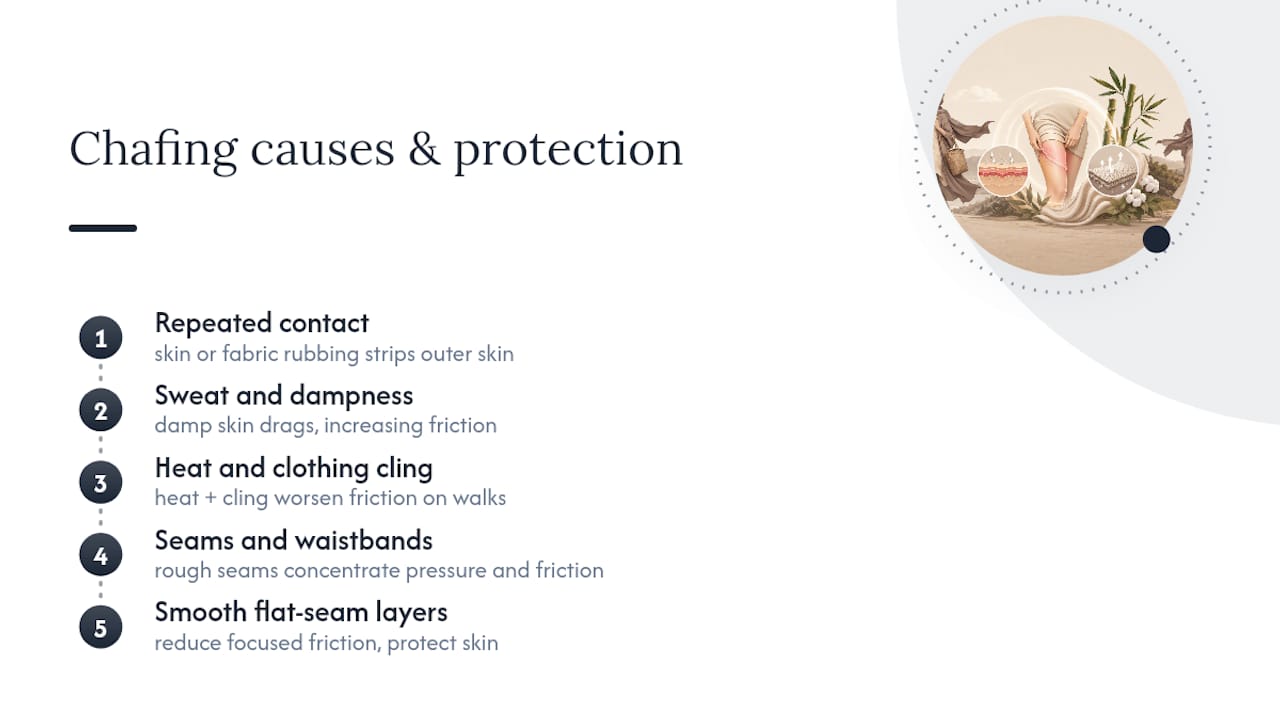
Chafing happens when skin rubs against skin, or against fabric, repeatedly enough to strip away the outer layer of skin. Add sweat, and the friction gets worse rather than better, because damp skin drags instead of gliding. Heat compounds it further, particularly on longer walks, during exercise, or on humid days when clothing clings.
This is a physiological response, not a body-type problem. Chafing can affect anyone whose thighs, or any two skin surfaces, touch and move against each other repeatedly, according to Healthline. The label "chub rub" can be misleading: thigh chafing can affect marathon runners, cyclists, toddlers, and people of all body shapes.
Seams and waistbands matter more than people realise. A rough seam sitting right where your thighs meet, or a waistband that digs in and shifts as you walk, creates a focal point where friction concentrates instead of spreading out. Seamless or flat-seam garments avoid that concentration, which is one reason they turn up so often in prevention advice, according to Verywell Health.
Practical prevention: fabrics, fits and accessories that stop thigh chafing
Fabric choice makes a bigger difference than most people expect. Cotton absorbs sweat and holds onto it, which keeps the skin damp for longer and increases drag. Moisture-wicking synthetic blends, and naturally breathable fibres like bamboo cotton, pull moisture away from the skin and let it evaporate faster, so the surface stays drier through the day.
Garment choice is the next lever, and it depends on what you're doing:
- Anti-chafe shorts or seamless underlayers work well under dresses, skirts, or abayas, creating a smooth barrier between thighs without adding bulk.
- Thigh bands suit situations where you want coverage without a full underlayer, particularly in warmer weather.
- Moisture-wicking leggings are the better call for exercise or long periods on your feet, since they manage sweat across a larger surface area.
Fit matters as much as fabric. A garment that's too tight will dig in at the seams and create pinch points; one that's too loose will ride up and bunch, which defeats the purpose entirely. Look for flat seams, smooth waistbands, and a fit that sits close without gripping. Anti-chafe garments create that smooth surface specifically to stop skin-on-skin contact, and they're especially useful under dresses or during exercise, per Healthline.
Powders have their place but come with a catch. Cornstarch-based powders absorb moisture and reduce tackiness for short, low-sweat activities. Under heavy sweat, though, they can clump into a paste that actually increases abrasion rather than easing it, which is worth knowing before you rely on powder for a long hot walk or a workout.
Pro Tip: If you know you'll be sweating heavily, skip the powder and reach for a barrier balm or a seamless underlayer instead. Powder works best for mild, short-lived friction, not sustained heat and moisture.
Barrier products and quick fixes you can apply today
Barrier balms, sticks, and petroleum jelly all work on the same principle: they coat the skin in a slick layer that lets surfaces glide instead of grip. Which one to reach for depends on the situation.
- Anti-chafe balms and sticks apply cleanly, don't feel greasy, and tend to last through several hours of activity without much mess.
- Petroleum jelly is the classic emergency fix. It's cheap, widely available, and effective, though it can feel heavier and transfer onto clothing more easily than a stick formula.
- Zinc oxide cream doubles as both a barrier and a mild skin-protectant, useful if the skin is already slightly irritated.
- Powders absorb moisture short-term but risk clumping under heavy sweat. Sometimes they turn into an abrasive paste that worsens friction rather than easing it, according to Healthline.
For anyone facing high humidity or a long, sweaty session, a smooth underlayer paired with a barrier balm tends to outperform powder alone, since powder-turned-paste is a real risk once sweat builds up.
Apply any barrier product to clean, dry skin, never over open or broken skin, and reapply after swimming or heavy sweating. If you have sensitive skin, patch test a small area first and wait a day before applying it more broadly.
How to care for chafed skin so it heals fast
Once the skin is irritated, the priority shifts from prevention to repair.
- Stop the rubbing straight away. Change clothing, remove tight garments, or pause the activity causing the friction.
- Clean gently with a mild, fragrance-free soap and lukewarm water, then pat the skin dry rather than rubbing it.
- Apply a protective barrier such as petroleum jelly or a zinc oxide cream to shield the area while it heals.
- Keep it covered but breathable with loose, soft clothing until the redness settles.
A gentle routine like this, paired with avoiding fragranced products, often brings noticeable improvement within a few days for mild chafing, per Acibadem International. Avoid scrubbing the area, skip perfumed lotions or wipes, and hold off on tight clothing until the skin has properly settled.
Pro Tip: A cool compress can take the sting out of freshly chafed skin, but dry it thoroughly afterwards. Damp skin left uncovered is exactly the condition that caused the problem in the first place.
Red flags and when to see a pharmacist or GP
Most chafing responds to self-care within a few days. Book an appointment if you notice spreading redness, pus, a fever, or pain that's getting worse rather than better. A pharmacist can point you towards suitable over-the-counter treatments for straightforward irritation, while a GP may need to prescribe something stronger if there are signs of infection, echoing the escalation guidance from Cleveland Clinic. When in doubt, pause the activity and get it checked rather than waiting it out.
Why a slim, breathable underlayer helps
A smooth fabric layer between your thighs removes the skin-on-skin contact that causes friction in the first place, while a breathable material manages the moisture that makes it worse. That's the logic behind Elm and Thread's approach with The Forme Collection: bamboo cotton underlayer trousers cut slim enough to sit invisibly beneath an abaya, with flat seams and a smooth waistband designed to avoid the pinch points that cause focal irritation.
Fit is the detail worth getting right. Choose a size that sits close to the leg without gripping, and check that seams don't sit directly over the inner thigh. Worn under an abaya or a longer dress, a slim underlayer like this adds no visible bulk while doing the quiet work of preventing rub.
Does diet or hydration affect thigh chafing?
Skin that's well hydrated tends to hold up better against friction than skin that's dry, flaky, or prone to cracking, since dry skin loses some of its natural elasticity and resistance to abrasion. Drinking enough water through the day supports overall skin condition, though it won't override the mechanical causes of chafing on its own. Friction and moisture from sweat are still the main drivers, and no amount of hydration will fully offset tight seams or the wrong fabric against sweaty skin.
Diet plays a more indirect role. A diet lacking in essential fatty acids or key vitamins can leave skin more prone to dryness and irritation generally, which makes it slightly more vulnerable to breaking down under repeated friction. There's no special "anti-chafing diet" backed by strong evidence, so treat hydration and general nutrition as supporting factors rather than a fix. They help the skin recover faster and resist damage, but the fabric touching your thighs and how much you sweat still matter far more day to day.
If you already deal with dry skin as a chronic issue, a light moisturiser applied away from friction zones—not right before you dress, since damp skin increases drag—can help keep the skin's barrier in better shape overall.
Everyday habits that cut down on chafing
Weight fluctuations change where and how much skin contacts skin, but chafing isn't exclusive to any particular body size, and prevention strategies work regardless of where you're starting from. If your weight shifts, it's worth reassessing garment fit rather than assuming old sizing still gives you the coverage or looseness it once did.
Hygiene routines matter more than people give them credit for. Showering and drying thoroughly after sweating, rather than letting sweat sit on the skin for hours, reduces the moisture that drives friction. Pay particular attention to fully drying skin folds before dressing, since residual dampness under clothing is often the difference between a comfortable day and an irritated one by evening.
Activity adjustments help too, especially if you know certain movements trigger chafing reliably. Runners often find that switching stride slightly or wearing thigh bands on long runs prevents a problem that shorter runs never caused. If you're on your feet all day for work, swapping to moisture-wicking underlayers rather than standard cotton can be the single biggest change you make.
Small, repeatable habits beat occasional fixes: applying a barrier balm as part of your morning routine on high-activity days is far more reliable than reaching for one only after chafing has already started.
Author perspective: prevention beats repeated treatment
Treating chafed skin over and over is a cycle worth breaking, not managing. The fix usually isn't dramatic. It's picking the right fabric, checking the seams, and giving your skin a smooth layer to move against instead of raw friction. Test what works for your body and your wardrobe, then stick with it.
— Elm
Try a breathable underlayer from Elm and Thread
If everything above points to one conclusion, it's this: friction and moisture are the enemy, and a smooth, breathable layer between your thighs solves both at once. A breathable underlayer collection is built around exactly that problem, using bamboo cotton for its softness and breathability, and cutting each pair slim enough to sit under an abaya without adding bulk or visible lines.

The design details focus on comfort: flat seams positioned away from friction zones, a smooth waistband, and a discreet side zip to minimise digging in during movement. Getting the size right matters, so check the sizing guide before ordering, and consider gentle washing to maintain fabric softness over repeated wear. If thigh chafing has been an ongoing frustration, browse The Forme Collection and find the fit that works under your everyday layers.
Sources
- Why thigh chafing happens and how to fix it | Verywell Health
- Thigh chafing: Causes, treatments and prevention | Healthline
- Chafing: causes, treatment & prevention | Cleveland Clinic
FAQ
What helps heal thigh chafing quickly?
Stop the friction, wash gently with mild soap, pat dry, and apply a barrier like petroleum jelly or zinc oxide cream. Most mild cases improve within a few days when kept clean, dry, and protected.
Can I put deodorant on my thighs to stop chafing?
Deodorant isn't designed for this and can irritate already sensitive skin, so it's better to use a purpose-made anti-chafe balm or petroleum jelly instead. These are formulated to reduce friction without the fragrances and alcohols found in most deodorants.
Does Vaseline stop thigh chafing?
Yes, petroleum jelly creates a slick barrier that reduces skin-on-skin friction and is a widely recommended emergency fix. It works well but can transfer onto clothing more than a purpose-made balm or stick.
How do I stop my thighs from chafing so much?
Combine moisture-wicking or breathable fabrics with a smooth underlayer or anti-chafe shorts, and keep the skin dry before dressing. For persistent chafing, a slim underlayer like Elm and Thread's Forme Collection removes the skin-on-skin contact that causes the problem in the first place.