
Yes, bamboo fabric is genuinely breathable, and in several lab tests it outperforms cotton on air permeability and moisture handling. But that advantage lives or dies on processing and construction: a heavy, tightly woven bamboo fabric can breathe worse than a light, loosely knitted cotton one. The fibre matters less than what happens to it afterwards.
TL;DR:
- Breathability of bamboo fabric depends heavily on fabric weight and construction, with lighter and loosely woven options outperforming dense, heavy ones regardless of fiber type.
- Many bamboo textiles sold on the market are made from regenerated bamboo viscose, which lacks the plant's natural lumen structure, and this process can affect breathability and moisture-wicking properties.
- In controlled tests, bamboo fabrics often show about twice the air permeability of cotton, but construction factors like weave and GSM can negate these advantages.
- Buyers should prioritize fabric weight in GSM and knit or weave type over fiber percentage, as the latter can be misleading about actual breathability.
- Proper care, including gentle washing and air drying, is essential to maintain bamboo viscose fabric performance and longevity.
Table of Contents
- Is bamboo breathable, and what does that even mean?
- Why bamboo fibre behaves differently to cotton
- What the lab data actually shows
- Choosing bamboo clothing by what you actually need it for
- How to care for bamboo without wrecking it
- The marketing claims worth questioning
- What has been learnt about designing breathable underlayers
- Where the numbers in this article come from
- The verdict on bamboo breathability, and why the industry oversimplifies it
- Sources
- FAQ
Is bamboo breathable, and what does that even mean?
"Breathable" gets thrown around loosely, but textile scientists measure it two specific ways. Air permeability is how easily air passes through the fabric structure, usually tested with ASTM D737 or the closely related ISO 9237 standard, both of which push air through a fixed area of fabric and measure the flow rate. Moisture vapour transmission rate (MVTR) measures how fast water vapour escapes through the fabric, often assessed under ISO 11092, which also covers thermal resistance. Together, these two numbers tell you far more than a swing tag ever will.
Neither figure is fixed to a fibre type. A cotton shirt and a bamboo shirt can post wildly different air permeability scores depending on:
- Fabric weight (GSM): lighter fabrics, generally under 160 grams per square metre, allow more airflow than heavier ones.
- Weave or knit structure: an open, loose knit or mesh panel breathes better than a dense sateen or twill, regardless of fibre.
- Yarn twist and thread count: tightly spun, densely packed yarns trap more air against the skin than loosely spun ones.
- Finishing treatments: coatings, softeners and certain dyes can reduce or improve airflow depending on how they're applied.
This is why two garments both labelled "100% bamboo" can feel completely different against the skin. One might be a breezy, loosely knitted t shirt; the other a dense, heavy-handle sateen sheet. The fibre name on the label tells you almost nothing about the number that actually determines comfort.
Why bamboo fibre behaves differently to cotton
Bamboo's reputation for breathability starts with its raw structure. The plant's cellulose fibre contains a natural lumen, a hollow central canal, along with micro-gaps that help draw moisture away from a surface. Cotton has a similar hollow structure, but bamboo's version tends to be finer, which is part of why raw bamboo fibre has a reputation for a soft, almost silky hand feel before it even reaches a loom.
Here's the catch that most product pages skip: almost none of the "bamboo" clothing on the market uses that raw fibre structure. The overwhelming majority is bamboo viscose (sometimes called bamboo rayon), a regenerated cellulosic fibre. Bamboo pulp is dissolved in chemical solvents and extruded into new filaments, a process that destroys the original lumen entirely. What survives into the finished yarn isn't the plant's natural architecture. It's a new filament shape, spun and knitted to mimic bamboo's soft, breathable feel.
Mechanically processed bamboo, sometimes marketed as "bamboo linen," keeps more of that original fibre structure intact because it skips the chemical dissolving step. It's rougher, more linen-like in hand feel, and rare in mainstream clothing because it's costlier and harder to spin at scale. If a claim about intact bamboo lumens sounds too good to be true on a soft jersey t shirt, it probably is: that structure typically survives only in mechanical linen processing, which almost nobody uses for everyday apparel.
Blends complicate things further. Bamboo cotton blends, a common combination in underlayers and loungewear, borrow properties from both fibres. Cotton contributes durability and structure; bamboo viscose contributes drape and a cooler surface feel. Construction still calls the shots. A bamboo cotton jersey knitted loosely will out-breathe a 100% bamboo viscose fabric woven densely, every time.
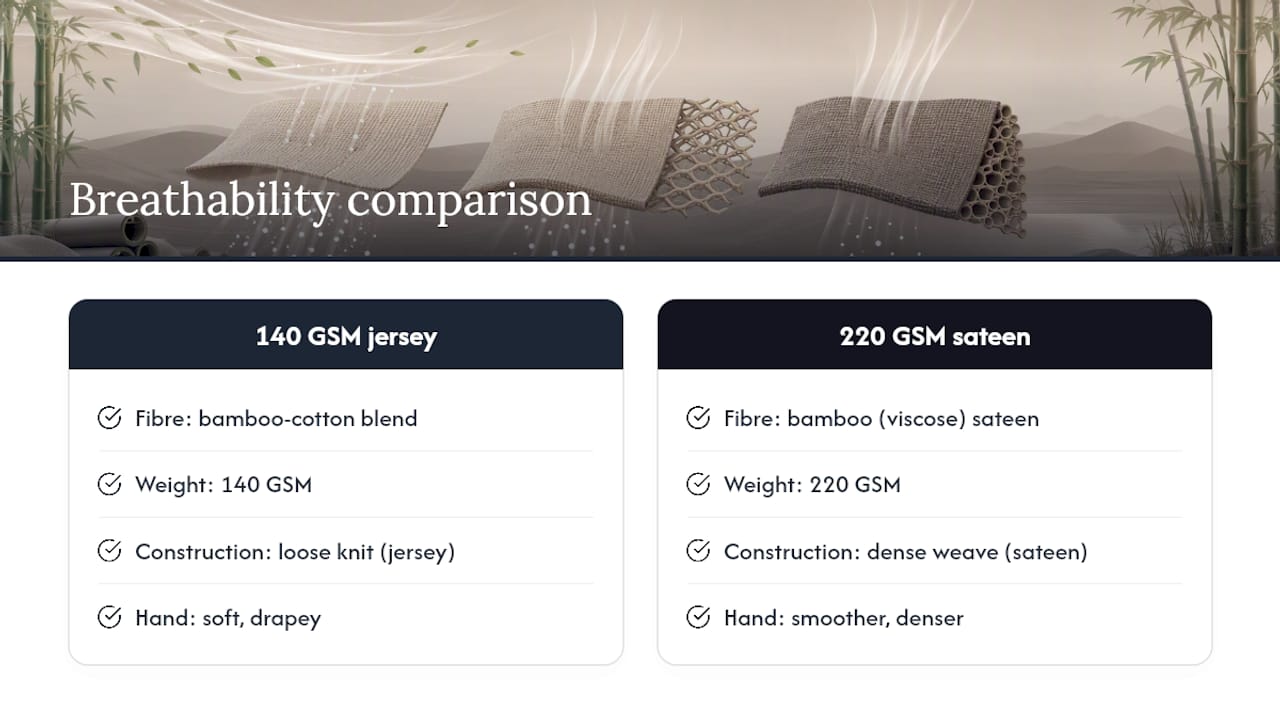
Pro Tip: Don't trust the fibre percentage alone. Look for the fabric weight in GSM and the knit or weave type on the product page. A 140 GSM bamboo cotton jersey will almost always breathe better than a 220 GSM bamboo sateen, whatever the label says about fibre content.
What the lab data actually shows
Peer-reviewed testing gives a more textured picture than either bamboo advocates or bamboo sceptics tend to admit.
"Air permeability of bamboo fabric was approximately 2.2 times higher than cotton fabric," according to one comparison of knitted fabrics made from bamboo, cotton and viscose fibre, which also recorded a bacterial eradication rate of a significantly higher bacterial eradication rate for bamboo compared to cotton.
That's a substantial gap, and it comes from a controlled test where knit structure was held reasonably comparable across samples of bamboo, cotton and viscose fabrics. The same research also found higher water absorbency for bamboo, which lines up with bamboo viscose's typical moisture regain higher than cotton, consistent with typical ranges for bamboo viscose versus cotton, using the ASTM D1909 comparison figures. Higher moisture regain means the fibre pulls in more water vapour before it feels saturated, which is a large part of why bamboo garments feel drier against the skin in humid conditions.
But the picture isn't universally in bamboo's favour. Gericke and Van der Pol's often-cited comparative study found that when fabric construction was held constant, regenerated bamboo and cotton fabrics showed no statistically significant difference in thermal resistance or water vapour resistance. That single finding is the reason this article keeps hammering on construction: fibre identity explains some of the variance in comfort testing, but weave, weight and knit density frequently explain more.
There's also a real distinction between the cool touch you feel the second you put a bamboo garment on and the breathability that keeps you comfortable three hours later. The initial cool sensation comes from the fabric's surface smoothness and how quickly it conducts heat away from the skin on contact, an effect that fades as the fabric and your skin reach thermal equilibrium, typically within 10 to 20 minutes. Sustained comfort over a full day depends on air permeability and MVTR instead, the metrics that determine whether sweat vapour actually escapes rather than sitting against you. A 2023 textile review reinforced this split, finding that selected bamboo fabric samples showed superior vertical wicking, vapour permeability and antimicrobial test results compared with untreated cotton controls, though the researchers noted sample-specific variation.
Read together, the honest summary is this: bamboo often wins on air permeability and moisture management in comparable tests, but "often" and "in comparable tests" are doing real work in that sentence. Construction can erase or reverse the advantage.
Choosing bamboo clothing by what you actually need it for
Not every garment benefits equally from bamboo's moisture-wicking strengths, and matching the fabric to the job matters more than chasing the highest fibre percentage on the label.
- Underwear and base layers. This is where bamboo earns its reputation. Constant skin contact means moisture management and softness matter more than almost anywhere else in your wardrobe, and a lightweight bamboo cotton blend in the 120 to 160 GSM range delivers both without adding bulk.
- Pyjamas and sleepwear. Overnight comfort depends heavily on MVTR, since trapped moisture is what wakes people up sweating. A looser knit bamboo fabric, ideally under 180 GSM, tends to perform well here.
- Sportswear. Bamboo viscose alone can lack the stretch recovery of synthetic performance fabrics, so look for bamboo blended with a small percentage of elastane, plus mesh ventilation zones at the back and underarms for genuine airflow during exertion.
- Everyday tees and layering pieces. A mid-weight bamboo cotton jersey, roughly 160 to 200 GSM, balances breathability with enough structure to hold its shape through a wash cycle.
- Outerwear. Bamboo brings little advantage here. Structure, wind resistance and insulation matter more than moisture-wicking once you're layering outerwear over everything else, so there's no strong reason to pay a premium for bamboo content in a coat.
Before buying, run through a short checklist. Check whether the listing specifies bamboo viscose, bamboo rayon or mechanically processed bamboo linen, since that single word changes what you're actually getting. Look for a stated GSM figure; anything the brand won't disclose is worth questioning. Where available, check for independent certification rather than taking sustainability claims at face value.
Pro Tip: If a product page won't tell you the fabric weight in GSM, treat that as a red flag rather than an oversight. Brands proud of their fabric performance almost always publish the number.
How to care for bamboo without wrecking it
Bamboo viscose needs gentler handling than cotton, and skipping that step is the most common way shoppers end up disappointed with a fabric that performed well in the shop.
Regenerated viscose fibres lose a meaningful amount of tensile strength when wet, which is a known property of viscose generally, not a manufacturing defect. That means aggressive wringing, high-heat tumble drying, and hot washes all accelerate fibre breakdown faster than they would on cotton. A cool or cold gentle-cycle wash, air drying flat, and mild detergent will noticeably extend the life of a bamboo garment.
Common downsides worth knowing before you buy:
- Pilling. Bamboo viscose blends, particularly those with lower-quality cotton, can pill faster than pure cotton under friction, such as at underarms or waistbands.
- Variable quality between brands. Because "bamboo" covers everything from premium closed-loop viscose to low-grade regenerated fibre, two garments with identical labels can differ sharply in feel and durability.
- Price. Well-processed bamboo fabric typically costs more than standard cotton, reflecting both raw material sourcing and, where used, more responsible processing methods.
- Wet strength loss. Repeated washing without gentle care shortens garment lifespan faster than with cotton of a similar weight.
None of this makes bamboo a poor choice. It just means the fabric rewards a little more care than a basic cotton tee, and buyers who skip that step are the ones most likely to leave a disappointed review.
The marketing claims worth questioning
Bamboo's genuine strengths get inflated by marketing copy often enough that a healthy dose of scepticism pays off.
The "2 to 3 degrees cooler" claim shows up on countless product pages, almost always without a citation. No peer-reviewed source in the available literature backs a specific temperature figure like this under real-world wearing conditions, and Gericke and Van der Pol's controlled comparison found no statistically significant thermal-resistance difference between bamboo and cotton when construction was held equal. Treat any precise-sounding temperature claim on a swing tag as marketing shorthand, not a lab result.
Antibacterial claims need similar scrutiny. Raw bamboo fibre does show antimicrobial properties in some lab settings, and one comparative study found a higher bacterial eradication rate for bamboo fabric than cotton in tested knitted samples. But that property can fade substantially once the fibre goes through chemical viscose processing, unless a manufacturer adds a separate antimicrobial finish and states so explicitly. A bare "naturally antibacterial" claim with no testing standard cited deserves a raised eyebrow.
Sustainability language deserves the same treatment. Terms like "closed-loop" viscose processing refer to a manufacturing method that recaptures and reuses the chemical solvents involved, reducing environmental impact compared with open-loop processing. The NRDC's fibre facts guide on bamboo points out that plenty of "bamboo" textiles are simply regenerated cellulosic fibres with no verification behind the sustainability story attached to them. Look for named certifications, such as OEKO-TEX Standard 100 (which tests for harmful substances) or GOTS (which covers organic and processing standards), rather than taking a brand's word for its own supply chain.
What has been learnt about designing breathable underlayers
Underlayers live closer to the skin than almost anything else you wear, which is precisely why Some collections are built around bamboo cotton blends rather than plain cotton or synthetic alternatives. Worn beneath an abaya for hours at a time, a trouser that traps heat or clings when damp becomes a daily irritation rather than an occasional one.
Fabric weight and fit both matter as much as fibre choice. A slim cut reduces the layers of fabric bunching against the body, which on its own improves airflow regardless of what the fabric is made from. Seam placement matters too. Seams are positioned away from friction points, since a seam sitting under constant pressure both irritates skin and traps moisture against it.
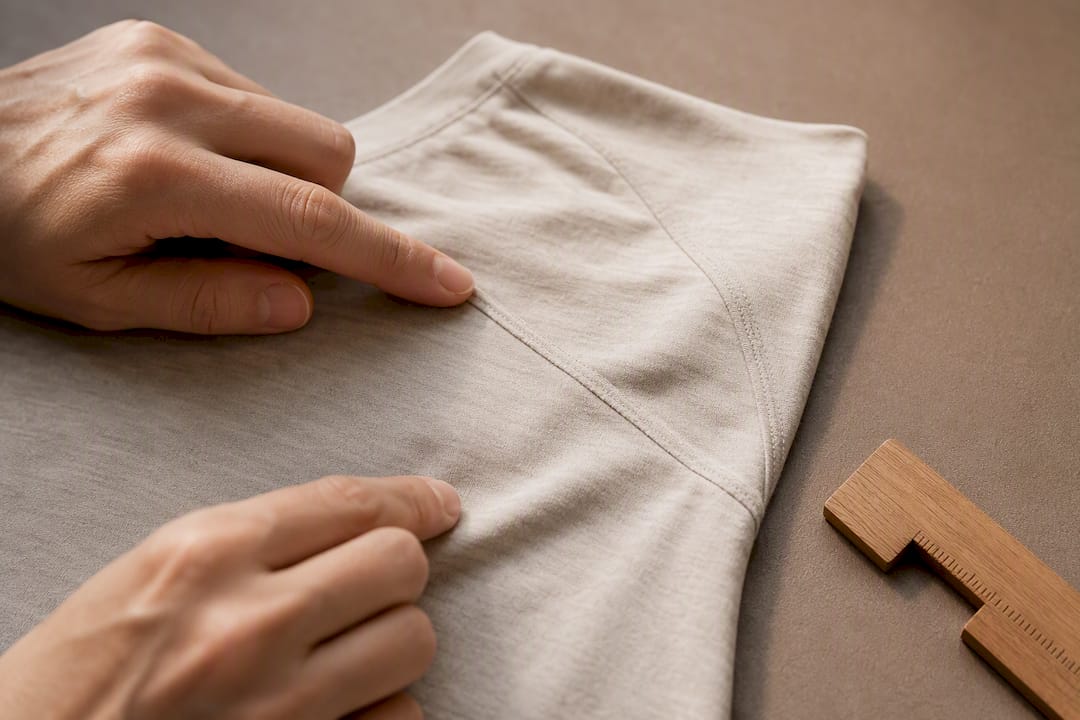
Some brands decide to skip visible branding to reduce printed logos and appliqué details, which can create dense, non-breathable patches interrupting the fabric's surface. Every design choice in an underlayer worn all day, every day, either supports comfort or works against it. There's rarely a neutral option.
Where the numbers in this article come from
The air permeability and antibacterial comparisons cited above come from a knitted fabric study of bamboo, cotton and viscose fibre published in 2024. The construction-matched thermal and water-vapour resistance findings come from Gericke and Van der Pol's 2010 comparative study of regenerated bamboo, cotton and viscose rayon fabrics. Wicking and antimicrobial data referenced above draw on a 2023 textile review comparing bamboo and cotton samples. For a plainer breakdown of moisture regain figures and fibre basics, the NRDC's bamboo fibre facts sheet is a solid starting point, and readers curious about the raw plant itself can consult the ATSDr's general bamboo reference.
The verdict on bamboo breathability, and why the industry oversimplifies it
The evidence supports a fairly confident claim: bamboo fabric, particularly bamboo cotton blends in light, open constructions, tends to outperform equivalent-weight cotton on air permeability and moisture handling. That's not marketing spin. It shows up across multiple tests with different methodologies.
Where the conventional advice falls short is treating "bamboo" as a single, fixed performance tier, as though the fibre name alone guarantees an outcome. It doesn't. Gericke and Van der Pol's finding that construction can erase the thermal-resistance gap entirely should be the headline fact in more buying guides than it currently is, not a footnote.
If you take one thing from this article, prioritise the GSM figure and the knit structure over the fibre percentage on the label. A well-constructed bamboo blend at the right weight will breathe better than almost anything else you can buy. A poorly constructed one, whatever the label claims, won't.
— Elm
Sources
- Comparison of antibacterial and some physical properties of knitted fabrics produced from bamboo, cotton and viscose fiber
- A comparative study of regenerated bamboo, cotton and viscose rayon fabrics. Part 1: selected comfort properties
- Bamboo fibre facts (NRDC)
- Comfort properties of bamboo samples compared to cotton samples (TLR 2023)
FAQ
What is the downside of bamboo fabric?
Bamboo viscose loses tensile strength when wet, meaning it needs gentler washing than cotton, and lower-quality blends are prone to pilling at friction points such as underarms. Quality also varies significantly between brands, since "bamboo" covers both premium closed-loop viscose and cheaper regenerated fibre.
Is bamboo as breathable as cotton?
Bamboo is often more breathable than cotton in comparable constructions, with one study measuring air permeability at roughly 2.2 times that of cotton. However, when fabric construction is held constant, thermal resistance and water vapour resistance differences may not be statistically significant when fabric construction is controlled, so weave and weight matter as much as fibre choice.
Is bamboo better for you than cotton?
Bamboo generally offers a softer hand feel and higher moisture regain than cotton, which many people find more comfortable against sensitive skin, though it requires more careful washing to maintain its strength over time. Neither fibre is objectively "better" across the board; the right choice depends on the garment, weight, and how it's constructed.
What is the coolest, most breathable fabric?
No single fibre wins outright, since breathability depends heavily on weave, weight and finish rather than fibre identity alone. Lightweight, loosely knitted bamboo cotton blends and open-weave cotton percales both perform strongly, with fabric construction typically explaining more of the difference than the fibre used.